How to Align ITAM with Business Objectives in 2025
Aligning IT Asset Management with business objectives take a clear understanding of where you stand, well-defined goals, the right technology, and collaboration across teams.
Many people think of IT Asset Management as just a back-office task. You track hardware, manage licenses, and make sure everything stays compliant. That’s important, but in 2025, ITAM can do a lot more than that.
When it’s connected to your business goals, ITAM can help cut costs, reduce risk, improve efficiency, and even support innovation. The challenge is figuring out how to link what your IT team does every day to what the business is trying to achieve.
In this article, we’ll explore how IT leaders can make ITAM a true business asset and ensure that IT investments work to support the organization’s bigger goals.
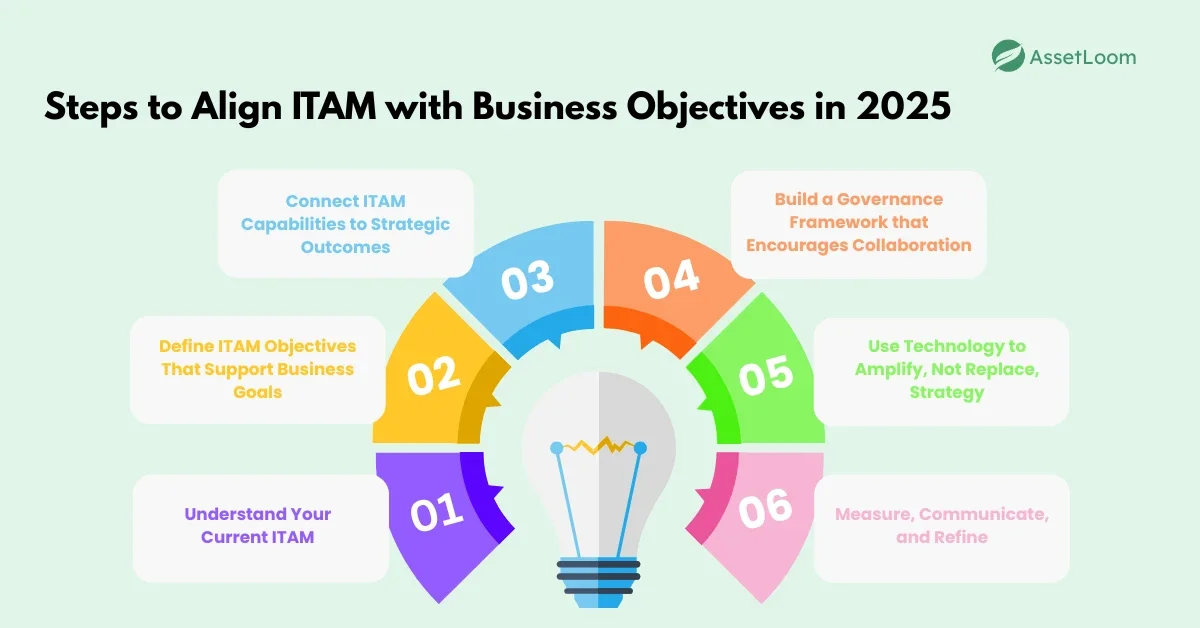
1. Understand Your Current ITAM
Before you can align IT Asset Management (ITAM) with your business goals, you need to know where you stand. Here’s how to do it clearly and systematically:
- List all your IT assets
Include hardware, software, cloud services, and licenses. Make sure nothing is overlooked. This includes older devices in storage, seldom-used software, and even shadow IT that may be operating outside of standard approval processes. A complete inventory helps prevent surprises down the road.
- Review your processes
Check how assets are tracked, maintained, and retired. Are procedures consistent across teams? For example, does IT update the inventory in the same way as procurement or operations? Inconsistent processes can lead to wasted spend, compliance risks, or missed renewals.
- Identify gaps and risks
Look for missing data, outdated assets, compliance risks, or inefficient workflows. For instance, expired software licenses or forgotten cloud subscriptions can create both financial and legal exposure. Document these gaps carefully so you know what to address first.
- Assess your maturity
Rate your ITAM processes on a simple scale: basic, intermediate, or advanced. This will help you see where improvements will have the most impact. Organizations at a basic level may still rely heavily on spreadsheets, while advanced organizations typically use centralized platforms and automation to manage assets efficiently.
The outcome of this step is a clear picture of your ITAM strengths and weaknesses. Once you know where you stand, you can plan how to connect ITAM to your business goals and make your assets work harder for the organization.
2. Define ITAM Objectives That Support Business Goals
Once you understand your current ITAM maturity, the next step is to define objectives that connect your ITAM efforts to what the business needs. Here’s a clear way to approach it:
- Identify key business priorities
Look at your organization’s goals for the year. Are they focused on reducing costs, improving efficiency, staying compliant, or supporting new initiatives? Knowing this will guide what ITAM should focus on. For example, if a company is planning to expand into new markets, ITAM can help by ensuring software licensing and hardware capacity scale accordingly.
- Translate business goals into ITAM objectives
For each business goal, define a related ITAM outcome. For instance:
- Cost reduction → optimize software licenses and reduce unused hardware
- Risk management → improve asset tracking and ensure compliance
- Efficiency → automate asset lifecycle processes
By doing this, you create a direct line between ITAM activities and measurable business results, making ITAM a strategic contributor rather than just a back-office task.
- Make objectives measurable
Set clear targets for each ITAM objective. This could be a percentage reduction in software spend, improved compliance scores, or faster asset deployment times. Measurable objectives provide accountability and allow you to demonstrate the value of ITAM to stakeholders.
- Communicate objectives across teams
Share your ITAM objectives with finance, procurement, and operations. Make sure everyone understands how ITAM contributes to broader business outcomes. Collaboration is key to success. Teams that understand the “why” behind ITAM processes are more likely to follow them consistently and provide input for improvements.
By following these steps, ITAM becomes more than a checklist, it starts directly supporting your organization’s goals.
3. Connect ITAM Capabilities to Strategic Outcomes
Now that your ITAM objectives are defined, the next step is to link them directly to business outcomes. This ensures every ITAM activity adds value beyond day-to-day operations.
List your ITAM capabilities
Include key functions such as:
- Asset discovery and tracking
- Software license managementHardware lifecycle management
- Compliance and risk monitoring
- Reporting and analytics
Map each capability to a business outcome
For each capability, define the specific business impact. For example:
- Asset tracking → supports accurate budgeting and reduces risk
- License management → lowers software costs and ensures compliance
- Lifecycle management → improves operational efficiency and avoids downtime
Adding concrete examples helps teams understand why each function matters and how it contributes to the bigger picture.
Prioritize based on impact
Focus on ITAM activities that deliver the highest value to the business first. This helps demonstrate tangible results quickly and builds confidence in the program. For example, optimizing software license usage might immediately free budget for innovation initiatives.
Track progress with metrics
Use KPIs to measure how each ITAM capability contributes to business goals. Examples include cost savings, asset utilization rates, compliance scores, or risk reduction. Over time, these metrics can help you adjust priorities and refine processes for maximum impact.
By connecting capabilities to outcomes, ITAM becomes more than a support function—it becomes a measurable contributor to business success.
4. Build a Governance Framework that Encourages Collaboration
To make ITAM truly effective, it’s not enough to manage assets; you need a framework that defines roles, responsibilities, and decision-making across teams. Here’s how to make governance simple and practical:
- Define roles and responsibilities
Clarify who owns each part of the ITAM process, from tracking assets to approving purchases. Include IT, finance, procurement, and operations teams where relevant. Clear ownership prevents confusion and ensures accountability.
- Establish policies and standards
Set rules for asset management that everyone follows, such as naming conventions, data entry standards, and approval workflows. This ensures consistency, reduces errors, and makes audits easier.
- Create communication channels
Set up regular check-ins, reports, and dashboards so stakeholders stay informed. Transparent communication helps prevent duplication, misalignment, and surprises, particularly when multiple teams are managing overlapping assets.
- Implement review and feedback cycles
Schedule periodic reviews to monitor compliance, performance, and alignment with business objectives. Encourage teams to provide feedback and suggest improvements. Continuous improvement ensures the framework evolves with changing business needs.
With a strong governance framework, ITAM becomes a collaborative effort that supports business goals, ensures accountability, and drives better decision-making across the organization.
5. Use Technology to Amplify, Not Replace, Strategy
Technology can make ITAM faster and smarter, but it works best when it supports your strategy not the other way around. Tools like AssetLoom can help make this connection seamless. Here’s how to use technology effectively:
- Choose tools that fit your needs
Select platforms like AssetLoom that help track assets, manage licenses, and provide clear reports. Make sure the tool supports your processes instead of forcing you to adapt to it.
- Automate repetitive tasks
Use AssetLoom to automate updates to asset records, track software usage, or monitor hardware lifecycle. This frees your team to focus on strategic decisions rather than manual work.
- Turn data into insight
Set up dashboards and reports in AssetLoom to show how ITAM contributes to business goals. Track cost savings, compliance, and asset utilization in ways your leadership team can easily understand.
- Keep humans in the loop
Technology should support your team, not replace them. Use AssetLoom to guide decisions and improve efficiency, but rely on people for strategy, judgment, and collaboration.
By using tools like AssetLoom thoughtfully, ITAM becomes smarter, more efficient, and fully aligned with your business objectives.
6. Measure, Communicate, and Refine
Even the best ITAM strategy needs regular attention. Measuring results, sharing insights, and making improvements ensures your efforts stay aligned with business goals.
- Track meaningful metrics
Use KPIs that show real business impact, like cost savings, compliance rates, or asset utilization. Tools like AssetLoom make it easier to gather accurate, up-to-date data.
- Share insights regularly
Communicate results with IT teams, finance, and leadership. Clear, simple reports help everyone understand how ITAM is contributing to the business. Visual dashboards, charts, and short summaries can make a big difference in engagement.
- Review and adjust
Set up regular reviews to see what’s working and what isn’t. Identify risks, fix issues, and look for opportunities to improve. ITAM is a living process, not a one-time project.
- Celebrate wins
Don’t forget to highlight successes whether it’s cost savings, smoother workflows, or improved compliance. Recognizing progress builds momentum and keeps teams engaged.
By measuring, communicating, and refining your ITAM strategy, you turn asset management into a continuous, value-driven process that directly supports business objectives.
Conclusion
Aligning IT Asset Management with business objectives doesn’t happen by accident. It takes a clear understanding of where you stand, well-defined goals, the right technology, and collaboration across teams.
By assessing your ITAM maturity, setting objectives that tie directly to business priorities, mapping capabilities to outcomes, building a collaborative governance framework, using tools like AssetLoom, and continuously measuring and refining your approach, ITAM can become a strategic driver not just an operational task.
The payoff is significant: lower costs, reduced risk, better efficiency, and IT investments that truly support what your organization is trying to achieve. Start small, focus on alignment, and build momentum over time. When ITAM and business goals move together, the results speak for themselves.