What Does an IT Asset Management Analyst Do?
IT Asset Management Analyst ensures efficient tracking, compliance, and lifecycle management of IT assets. Discover their key responsibilities
You might think they just sit at a desk, keeping track of computers and software. That’s part of the job, but there’s much more to it.
An IT Asset Management Analyst manages the entire lifecycle of a company’s IT assets, from purchase to disposal. They make sure everything is tracked, optimized, and meets regulations. In this blog, we’ll look at the key responsibilities of an IT Asset Management Analyst, the skills they need, and how tools like AssetLoom can help them do their job more efficiently.
What is IT Asset Management?What is an IT Asset Management Analyst?
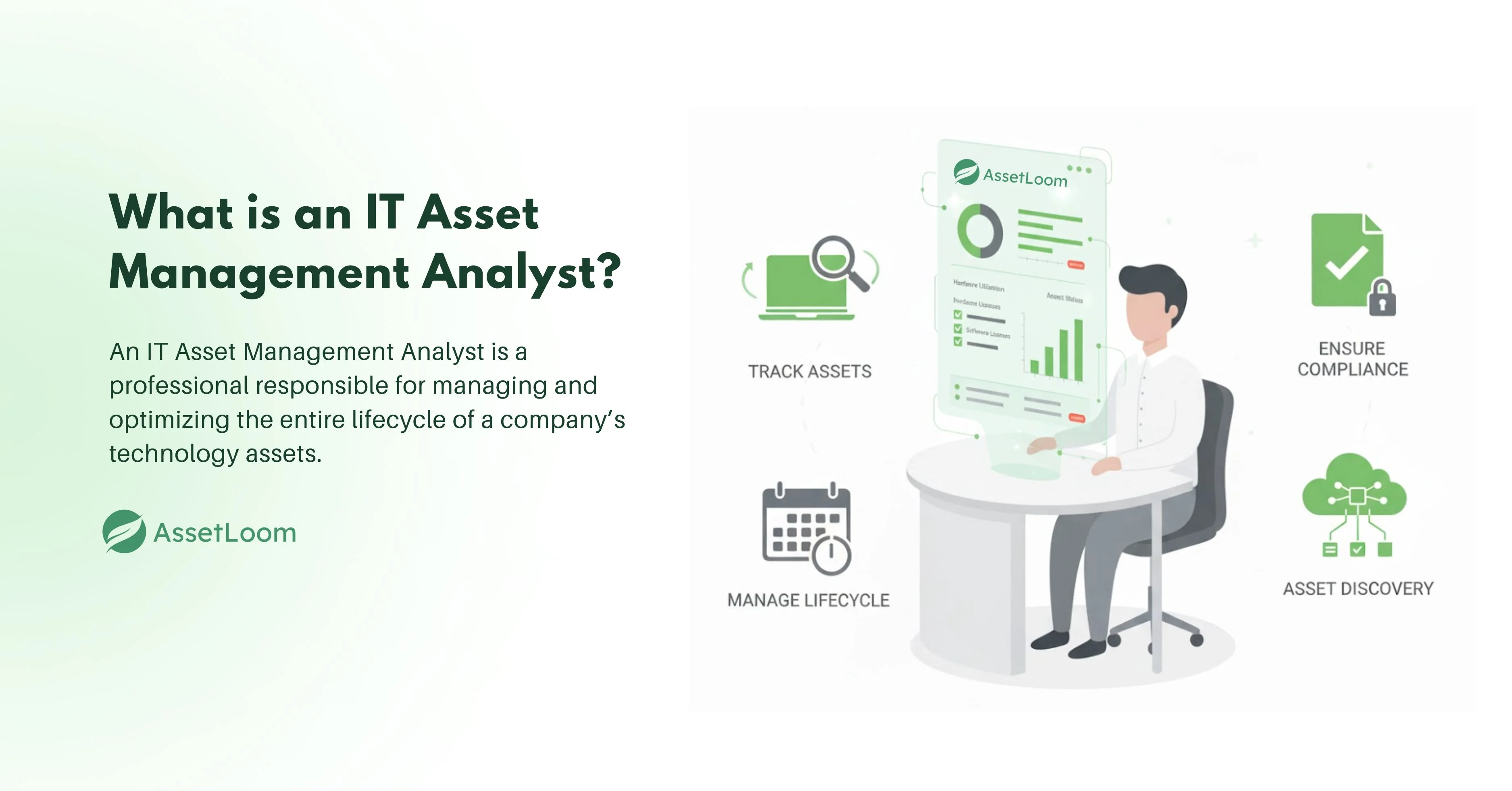
An IT Asset Management Analyst is a professional who manages and optimizes a company’s technology assets. They track, maintain, and ensure efficient use of these assets throughout their lifecycle, from procurement to retirement.
Example:
- A company buys 100 laptops for employees.
- Over time, the IT department loses track of where the laptops are or which employees have them.
- The IT Asset Management Analyst uses tools like AssetLoom to assign each laptop to the correct employee, maintain them, and retire them when needed.
- This process helps prevent unnecessary purchases and reduces the risk of losing assets.
Why is the Role Important?
- The role is becoming popular in industries like IT services, finance, healthcare, and manufacturing.
- As companies use more technology, the need to manage IT assets grows.
- With cloud computing, remote work, and complex software, the need for a dedicated analyst has become essential.
Skills and Responsibilities
An IT Asset Management Analyst needs:
- Technical knowledge to understand how assets work.
- Organizational skills to track and manage large numbers of assets.
- Understanding of asset management methods to optimize processes.
Their key tasks include:
- Tracking asset usage.
- Monitoring software license compliance.
- Documenting and managing technology assets efficiently.
The role requires a combination of technical knowledge, strong organizational skills, and an understanding of various asset management methodologies. An IT Asset Management Analyst keeps track of asset usage, monitors software license compliance, and ensures that all technology is documented and properly utilized.
Key Responsibilities of an IT Asset Management Analyst
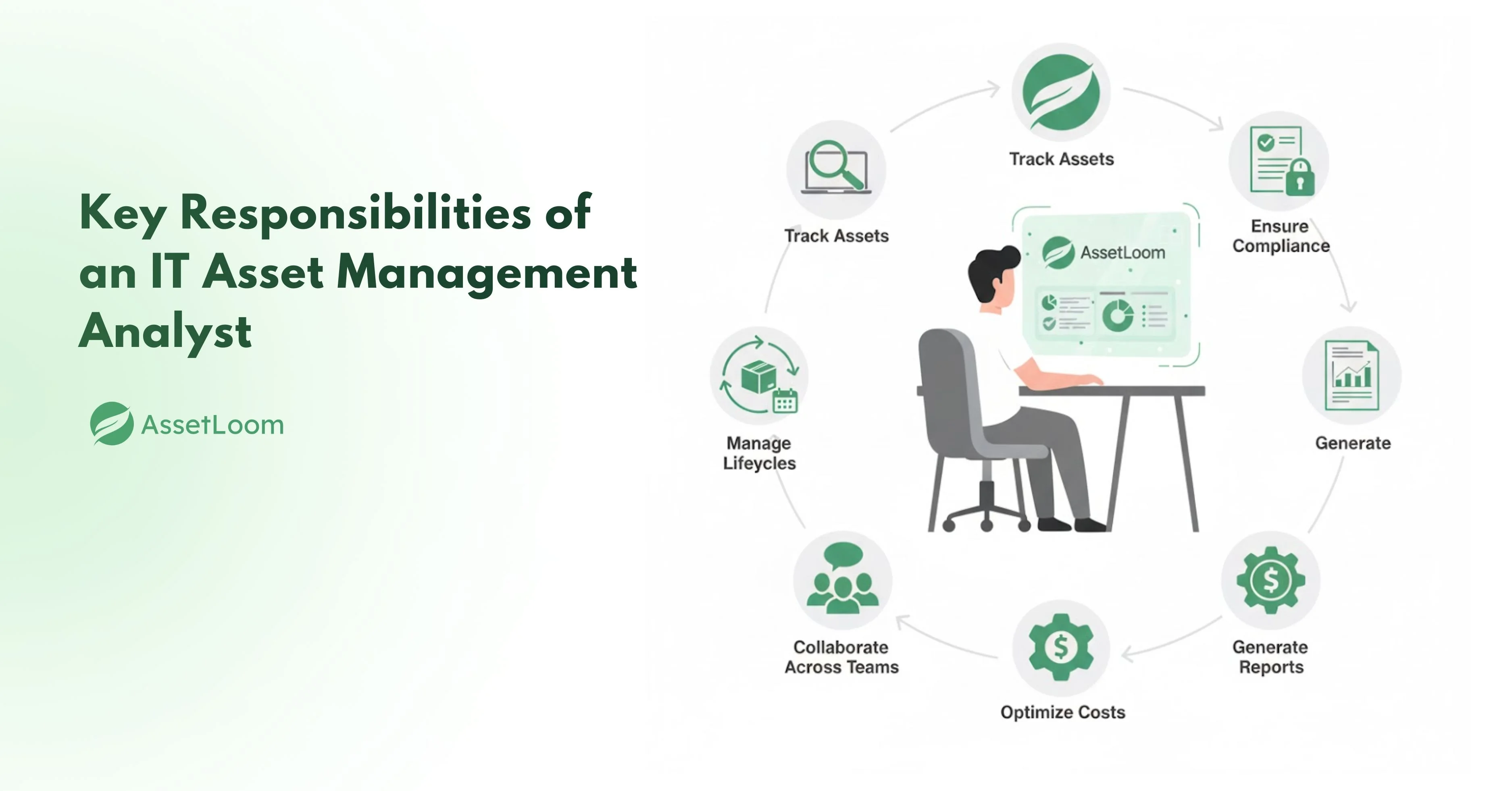
An IT Asset Management Analyst plays a critical role in ensuring that a company’s technology assets are properly tracked, optimized, and compliant. Below are the key responsibilities that define the role:
1. Asset Tracking and Inventory Management
One of the primary duties of an IT Asset Management Analyst is to keep track of all IT assets, including hardware (laptops, desktops, servers) and software (licenses, cloud subscriptions). This includes:
- Conducting regular audits to ensure the accurate location and status of assets.
- Updating asset records to reflect changes such as transfers, upgrades, or disposals.
- Using software like AssetLoom to centralize asset information, making it easily accessible to the relevant teams.
Example: The analyst may discover a laptop that hasn’t been used for several months but is still listed as active. They would update the system to reflect its current status and reassign it if necessary, preventing the company from purchasing additional devices unnecessarily.
2. Lifecycle Management
An IT Asset Management Analyst is responsible for overseeing the lifecycle of each asset, from procurement to disposal. This includes:
- Monitoring when assets need maintenance or replacement.
- Ensuring assets are retired and disposed of properly to avoid unnecessary storage and potential security risks.
- Managing warranties, service contracts, and support renewals.
Example: If a server is nearing the end of its useful life, the analyst will coordinate its replacement, ensuring that the company doesn’t face unexpected downtime due to outdated equipment.
3. Compliance and Software Licensing
Ensuring that the company is compliant with licensing agreements and regulations is another key responsibility. This includes:
- Monitoring software licenses to ensure the company does not exceed its allowed number of installations or miss renewals.
- Keeping records of all software and hardware warranties and support agreements to avoid compliance penalties.
- Keeping track of industry regulations, ensuring that the company adheres to legal standards related to IT asset management.
Example: The analyst might find that the company has been using more software licenses than it has paid for. They would take action to reduce excess usage and ensure compliance with the vendor’s terms, saving the company from potential fines.
4. Cost Optimization and Budgeting
An IT Asset Management Analyst plays a vital role in reducing unnecessary costs by managing IT assets more efficiently. Their responsibilities include:
- Identifying underutilized assets and finding ways to repurpose or retire them to free up budget for new, more efficient technology.
- Analyzing the total cost of ownership (TCO) for assets, including initial purchase, ongoing maintenance, and disposal costs.
- Collaborating with the finance and procurement teams to set budgets for asset purchases and replacements.
Example: If the analyst identifies several unused software licenses that are still being paid for, they would recommend canceling or consolidating these licenses, freeing up funds for more essential assets.
5. Reporting and Analytics
A key part of the IT Asset Management Analyst’s role is to provide regular reports to management on the status of IT assets. This includes:
- Creating reports on asset utilization, costs, and lifecycle status.
- Analyzing data to predict future needs or highlight areas for improvement.
- Using these reports to recommend changes or improvements in asset management strategies.
Example: After analyzing asset usage data, the analyst might discover that a particular software tool is underused across the organization. They would report this to management and suggest either consolidating licenses or switching to a more cost-effective solution.
6. Collaboration with Other Departments
IT Asset Management Analysts work closely with other departments to ensure smooth asset management across the organization. Their responsibilities here include:
- Coordinating with IT support and operations teams to ensure assets are maintained and serviced appropriately.
- Working with the procurement team to evaluate and purchase new assets as needed.
- Collaborating with legal and compliance teams to ensure that all assets meet regulatory standards and compliance requirements.
Example: The analyst might collaborate with HR to ensure that laptops are assigned to new employees and updated in the asset management system immediately upon onboarding.
7. Asset Risk Management
An IT Asset Management Analyst also plays a key role in identifying and mitigating risks related to the company’s assets. This includes:
- Identifying security risks related to outdated or unmonitored assets.
- Ensuring data protection through secure disposal and decommissioning processes.
- Managing insurance for high-value assets to protect against loss or damage.
Example: If the analyst identifies that an old server may be vulnerable to security breaches, they would prioritize its replacement, ensuring that the organization’s sensitive data is protected.
8. Asset Configuration and Optimization
Some IT Asset Management Analysts are involved in configuring new assets to meet the specific needs of the organization. This includes:
- Setting up and optimizing devices, software, and systems to align with company workflows.
- Customizing asset configurations to ensure compatibility with other tools or systems.
Example: When new workstations are purchased, the analyst may configure them with the necessary software, settings, and security protocols to ensure they are ready for use by employees.
Skills Required for an IT Asset Management Analyst
An IT Asset Management Analyst plays a crucial role in ensuring that a company’s technology assets are efficiently tracked, maintained, and optimized. To perform these tasks effectively, the following skills are essential:
1. Technical Knowledge of IT Assets
An IT Asset Management Analyst must have a strong understanding of both hardware and software systems. They should be familiar with the types of technology the organization uses, such as laptops, servers, network devices, and various software applications.
Example: If a company uses specialized software like CRM or ERP systems, the analyst should know how these tools integrate with other systems and how to track them accurately.
2. Inventory Management
Effective IT inventory management is key to an IT Asset Management Analyst’s role. They must be able to track assets, maintain records, and ensure that everything is properly documented. This includes both physical assets like computers and equipment, as well as intangible assets like software licenses and cloud subscriptions.
Example: The analyst should be able to easily locate a specific laptop assigned to an employee and know when it was purchased, its warranty status, and any upcoming maintenance or replacement needs.
3. Data Analysis and Reporting
An analyst must have strong analytical skills to assess data on asset usage, performance, and costs. They need to identify trends, make sense of complex datasets, and generate reports to help management make informed decisions about asset investments and optimizations.
Example: The analyst might notice that certain software tools are underused across the organization. By analyzing usage data, they can recommend consolidating licenses or switching to a more cost-effective solution.
4. Compliance and Risk Management
An understanding of legal and regulatory requirements is essential for ensuring that the organization remains compliant with software licensing agreements and other asset-related regulations. Analysts need to be familiar with laws governing software licensing, hardware disposal, and data security.
Example: The analyst ensures that all software is properly licensed, avoiding the risk of fines and legal issues. They also help ensure that outdated or decommissioned equipment is securely wiped before disposal, protecting sensitive company data.
5. Problem-Solving
The ability to identify issues and develop practical solutions is essential for IT Asset Management Analysts. Whether it’s finding ways to reduce costs, managing overstocked or underutilized assets, or addressing compliance gaps, problem-solving is a critical skill in this role.
Example: If a company has excess software licenses that are no longer in use, the analyst would find ways to consolidate those licenses or cancel unused ones, saving money for the business.
6. Project Management
IT Asset Management Analysts often manage multiple projects simultaneously, whether it’s tracking assets, conducting audits, or overseeing upgrades. Strong project management skills help them stay organized, meet deadlines, and coordinate with other departments efficiently.
Example: The analyst might be tasked with overseeing the annual audit of all IT assets, ensuring that the audit is completed on time and that all relevant departments are involved.
7. Communication Skills
Clear communication is essential for an IT Asset Management Analyst, as they frequently collaborate with various teams, including IT, finance, procurement, and legal. The ability to explain technical concepts in simple terms is also important when working with non-technical stakeholders.
Example: When a new software tool needs to be deployed, the analyst must explain to the IT department what equipment is required, how it will be managed, and ensure it complies with licensing agreements.
8. Attention to Detail
An IT Asset Management Analyst must be meticulous when tracking assets, updating records, and managing compliance. Small mistakes, such as failing to track a license renewal or misspelling an asset’s serial number, can lead to larger problems down the line.
Example: The analyst might notice that the serial number for a laptop has been incorrectly entered into the system. This attention to detail ensures that all assets are accurately recorded and easy to locate when needed.
9. Familiarity with Asset Management Tools and Software
Proficiency in IT asset management software is crucial for managing assets efficiently. Tools like AssetLoom help analysts track, organize, and optimize IT assets, allowing them to easily maintain an up-to-date inventory, monitor asset status, and generate reports.
Example: The analyst might use AssetLoom’s automated tracking system to receive alerts about upcoming license renewals or hardware replacements, ensuring that nothing falls through the cracks.
10. Adaptability
The world of IT is constantly changing, and so are the tools and technologies that businesses rely on. An IT Asset Management Analyst must be adaptable and open to learning new systems, software, and methodologies as they evolve.
Example: The analyst might need to learn how to manage assets in a hybrid IT environment, where some assets are on-premises and others are in the cloud, adapting their processes and tools to suit the new setup.
How IT Asset Management Analysts Use AssetLoom
AssetLoom is an IT asset management software designed to help businesses track, manage, and optimize their IT assets. For IT Asset Management Analysts, using AssetLoom can significantly streamline the process of managing hardware, software, and other technology resources.
Here’s a list of how IT Asset Management Analysts use AssetLoom:
- Discovery Assets: Automatic network scan and asset discovery
- Lifecycle Management: Track asset journey from procurement to disposal
- Asset Allocation: Booking, reservation, and loan management
- Customization: Tailor categories, fields, and workflows to fit your needs
- Inventory Tracking: Real-time tracking and updates on asset status
- Asset Tagging: Use QR codes, barcodes for easy identification
- Bulk Edit: Modify multiple assets at once for faster management
- Pre-Defined Kits: Easily manage asset bundles and configurations
- Alerts & Notifications: Stay informed on asset status and updates
- Dashboard & Reports: Visual insights into asset health and usage
- Custody Verification: Confirm and track asset custodianship
Career Path of an IT Asset Management Analyst
The role of an IT Asset Management Analyst is a great starting point for a career in IT management and offers opportunities for growth within the field of technology and asset management. Here’s an overview of the potential career path for someone in this role:
1. Entry-Level: IT Asset Management Assistant / Junior Analyst
At the start of their career, many IT Asset Management Analysts begin as IT Asset Management Assistants or Junior Analysts. In these entry-level roles, individuals typically assist with basic asset tracking, inventory management, and data entry. This is where they learn the ropes of asset management and become familiar with the company’s IT systems and processes.
Key Responsibilities:
- Assisting with inventory audits and asset tracking.
- Updating asset records in management systems.
- Supporting senior analysts with day-to-day asset management tasks.
Skills Developed:
- Basic understanding of IT asset management tools.
- Familiarity with inventory management processes.
- Introduction to compliance and software licensing basics.
2. Mid-Level: IT Asset Management Analyst
After gaining experience, individuals move into the IT Asset Management Analyst role. Here, they become responsible for managing the full lifecycle of IT assets, from procurement to disposal. This is a more autonomous role, with analysts managing their own projects, collaborating with other departments, and making decisions about asset optimization and compliance.
Key Responsibilities:
- Managing asset inventories and performing regular audits.
- Tracking software licenses and ensuring compliance.
- Providing cost optimization insights and reporting on asset usage.
- Collaborating with IT, finance, and procurement teams.
Skills Developed:
- Advanced knowledge of asset management methodologies (e.g., lifecycle management, TCO).
- Proficiency with asset management software and tools.
- Strong analytical, reporting, and problem-solving skills.
3. Senior-Level: Senior IT Asset Management Analyst / Lead Analyst
At the senior level, professionals take on more responsibility, often leading teams or managing larger asset portfolios. Senior IT Asset Management Analysts oversee more complex projects, such as large-scale audits, integrations of new asset management systems, and strategic planning for technology investments. They may also mentor junior analysts and help shape the organization’s overall asset management strategy.
Key Responsibilities:
- Leading asset management projects and teams.
- Developing and implementing asset management strategies.
- Managing relationships with vendors and third-party service providers.
- Making recommendations for long-term technology investments and cost-saving measures.
Skills Developed:
- Leadership and team management.
- Strategic thinking and planning.
- In-depth knowledge of industry regulations and compliance standards.
- Experience with cross-departmental collaboration and project management.
4. Managerial Level: IT Asset Management Manager
At the managerial level, professionals in IT asset management take on a broader, more strategic role. They oversee the entire asset management function within the organization, ensuring alignment with business goals, budgets, and IT strategies. They are responsible for creating and implementing policies and procedures for asset tracking, compliance, and cost management.
Key Responsibilities:
- Managing a team of asset management analysts and assistants.
- Developing asset management policies and best practices.
- Overseeing budget planning and asset procurement.
- Reporting to senior executives on asset performance and optimization strategies.
Skills Developed:
- High-level management and organizational skills.
- Expertise in financial planning and budgeting for IT assets.
- Ability to align asset management with the organization’s overall business objectives.
5. Executive Level: Director of IT Asset Management / Chief Information Officer (CIO)
At the executive level, professionals with a background in IT Asset Management can transition into broader IT leadership roles. The Director of IT Asset Management focuses on the strategic management of the company’s entire IT infrastructure, while the CIO oversees the overall technology strategy for the organization. These roles require a combination of technical expertise, leadership, and business acumen.
Key Responsibilities:
- Setting the long-term IT strategy for the organization.
- Overseeing the company’s entire IT infrastructure, including asset management.
- Managing large teams and budgets, and reporting to the board or executive leadership.
Skills Developed:
- Leadership and executive-level management.
- High-level decision-making and strategic planning.
- Extensive experience in IT operations, technology management, and cost optimization.
Alternate Career Paths and Specializations
While IT Asset Management Analyst is a specialized role, it opens doors to various alternate career paths:
- IT Project Manager: With experience in asset management and project coordination, analysts can move into project management roles overseeing IT infrastructure projects.
- Software Asset Manager: Specializing in software asset management (SAM), focusing specifically on software licenses, usage, and compliance.
- Procurement Specialist: Some analysts may transition into procurement, handling IT asset purchasing and vendor management.
- IT Operations Manager: Transitioning into a broader IT operations role, managing not only assets but also the day-to-day technical functions of the organization.
To remain competitive in this dynamic field, professionals should stay informed about the latest trends and best practices.
Conclusion
IT Asset Management Analysts play a key role in making sure a company’s technology assets are tracked, maintained, and used efficiently. They manage the entire lifecycle of assets, ensure compliance, and find ways to save costs. This helps businesses get the most value from their technology.
Tools like AssetLoom help IT Asset Management Analysts improve their workflow, accuracy, and decision-making. From discovering assets and managing their lifecycle to tracking in real-time and generating reports, AssetLoom provides a complete solution for asset management.